
Practical guide / Hotels & venues
Hotel drone video: which shots do you need?
Rooms, spa, restaurant and grounds: what should your hotel video show, and which camera should you use? Advice on planning a shoot and comparing quotes, with examples from Château d’Urspelt and Villa Resorts.
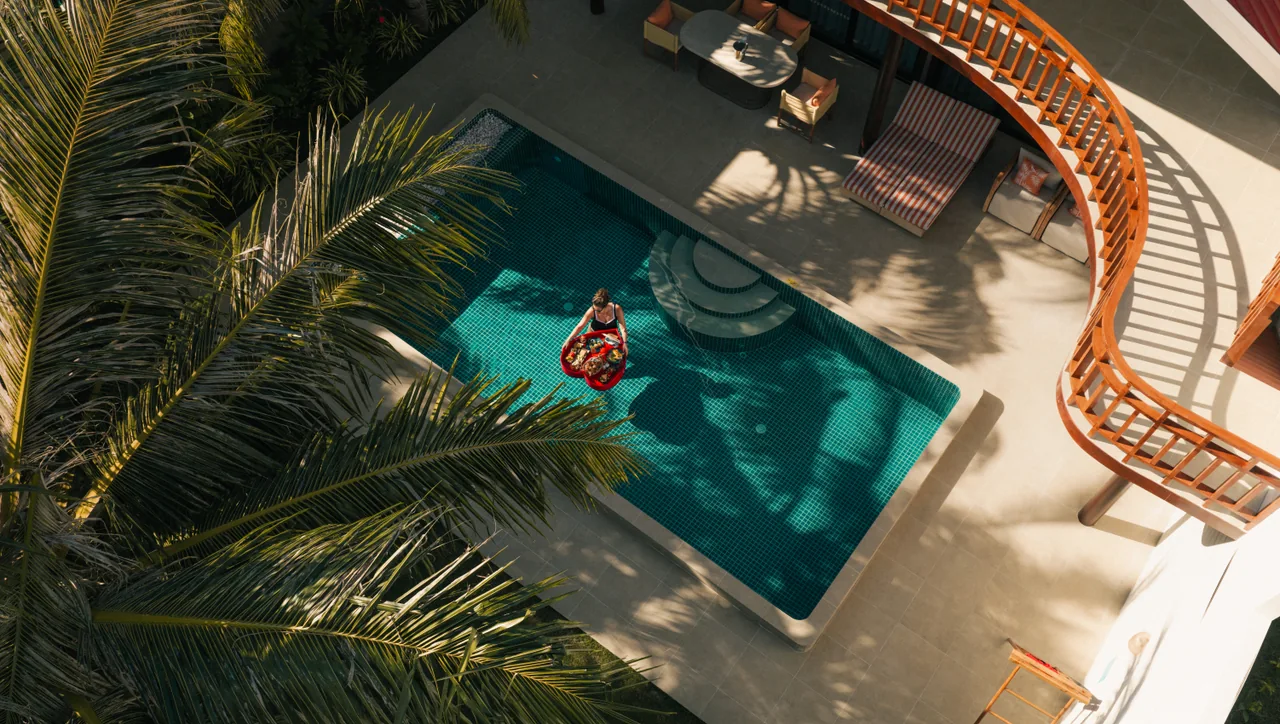
Key points
Choose the spaces to show according to the offer you want to promote: a spa break, a suite, a restaurant or a corporate event.
-
A camera drone shows the setting; FPV takes the viewer through outdoor and indoor spaces; a ground camera captures rooms, service and details.
-
Arrange access with the hotel team and agree on delivery formats before the shoot.
-
A quote should specify the filming, editing, video versions and usage rights.
Several clients have told us they saw their property differently through our footage. They know the place inside out, but a shot over the water or through a courtyard reveals angles they are not used to seeing.
For a hotel video, these shots can show the beach in front of the villas, the courtyard behind a façade or the route from outside into the spa. Prospective guests get a clearer idea of where they might stay.
Which spaces should you show, where is a drone useful, and what needs to be arranged before the shoot? Here are the points to discuss with your video provider, drawing on our footage at Château d’Urspelt and for Villa Resorts.
Which spaces should your hotel video show?
Start with the offer you want to promote. For a weekend spa break, the pool, relaxation areas and bedroom matter more than the meeting room. For a business looking for somewhere to bring its team together, that same meeting room becomes a priority.
Questions received by reception are a useful starting point. Do guests ask to see a suite’s terrace? Are they unsure what the spa includes? Do they want to know how far their room is from the beach? Use these questions to build your shot list.
| What you want to present | Shots to plan |
|---|---|
| A room or suite | A wide shot, the view from the window or terrace, the bathroom and the features specific to that room category |
| A spa break | The pool, relaxation areas and access routes, with shots held long enough to see the layout |
| The restaurant | The dining room, terrace and view; ground-level shots of the food, service and team at work |
| Meetings and corporate events | The room set up for the intended number of guests, its equipment, breakout spaces and access to the hotel |
A quick pass through a bedroom is not always enough. Guests need time to see what they would be booking. A wide shot followed by a few closer views of the terrace, furniture or bathroom will often be more useful than a long flight through corridors.
If the video shows several room categories, identify them on screen or on the page where the video appears. This avoids suggesting that every room has the same terrace or facilities.
Camera drone, FPV or ground camera: which should you use?
The stabilised camera drone is suited to wide shots: placing a hotel within its grounds, showing a property spread across several buildings or revealing the beach in front of a resort. A slow move gives viewers time to take in both the landscape and the property.
The FPV drone is useful for following a route: through a courtyard, alongside a pool or from a terrace into another space, where the conditions allow it. It gives a sense of moving through the property, from angles that are difficult to achieve with a ground camera. FPV can also be slow; it does not have to mean fast flying.
The ground camera is still useful for showing a room in detail, a dish, a welcome at reception or a member of staff at work. Choose the equipment shot by shot. If the drone has to move too quickly past something important, plan an additional shot.
Château d’Urspelt: the courtyard and spa in FPV
At Château d’Urspelt in Luxembourg, DB Studio captured FPV footage of the façade, courtyard, outdoor pool and indoor spa pool.
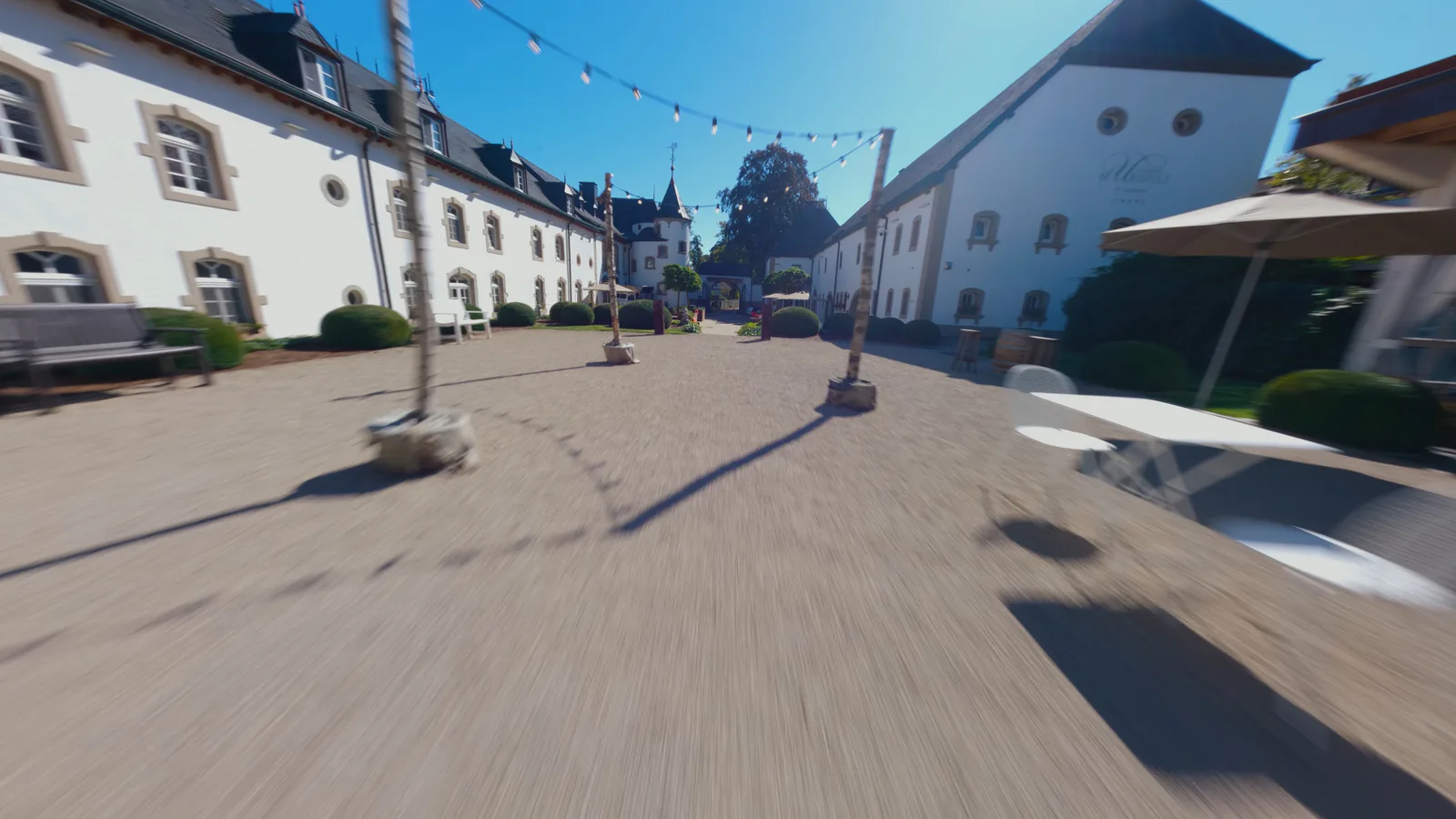
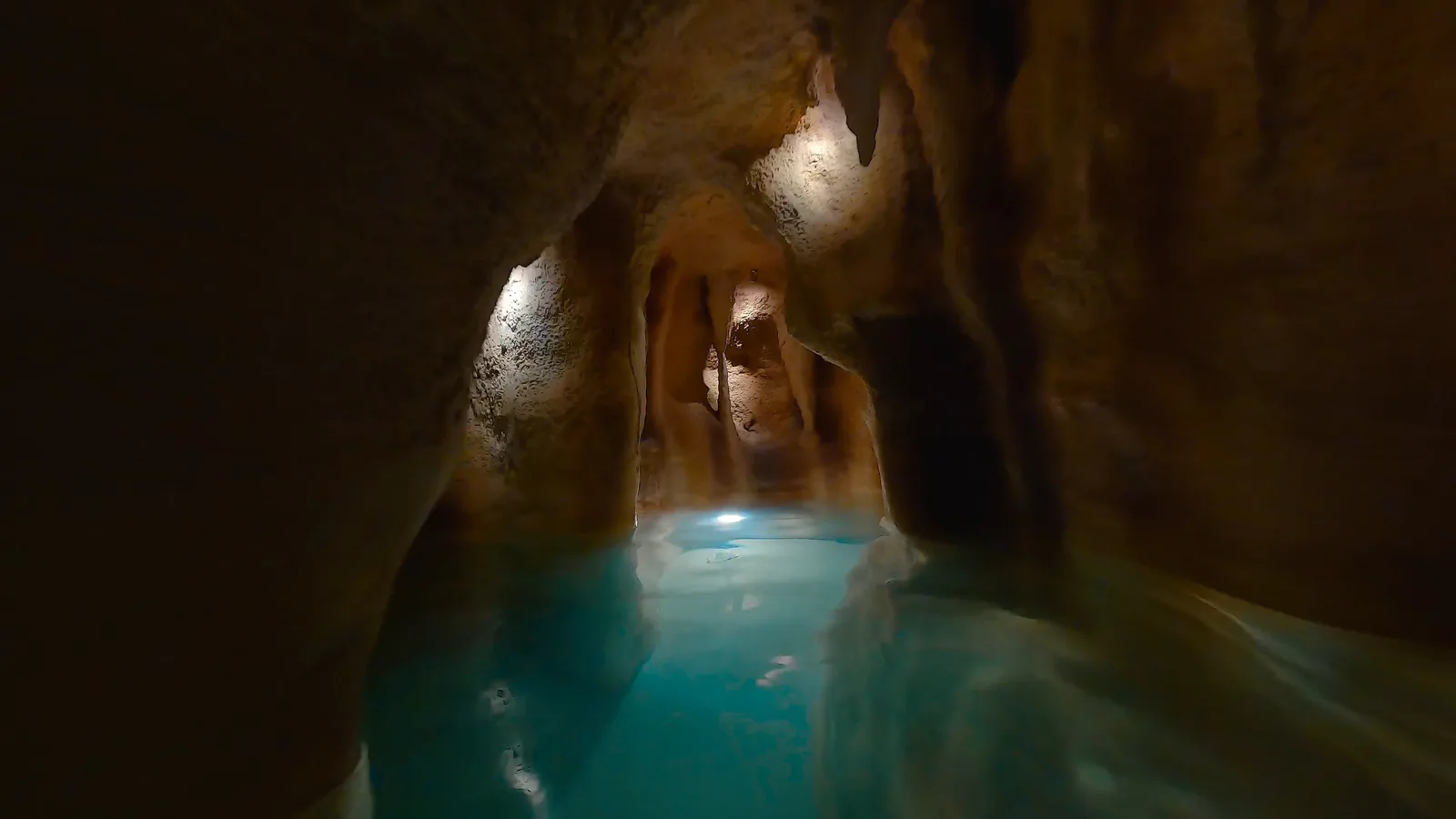
These two spaces call for different shots. In the courtyard, a wider view shows the façades and terraces. In the spa, a closer composition brings out the stone walls, lighting and reflections on the water.
This is worth discussing during the recce: which spaces benefit from a moving shot, and which need slower or closer views? The answer depends on the architecture, the light and what you want to highlight.
Villa Resorts: showing the villas and their surroundings
For Villa Resorts in the Maldives, DB Studio worked as a drone pilot and aerial camera operator, capturing stabilised drone and FPV footage at Villa Nautica, Royal Island and Villa Park.
The setting is part of choosing a holiday in the Maldives. Seeing the room is not enough: the beach, lagoon and villa’s outdoor spaces matter too. Aerial views show how these spaces fit together, while closer passes reveal the terraces and immediate surroundings.
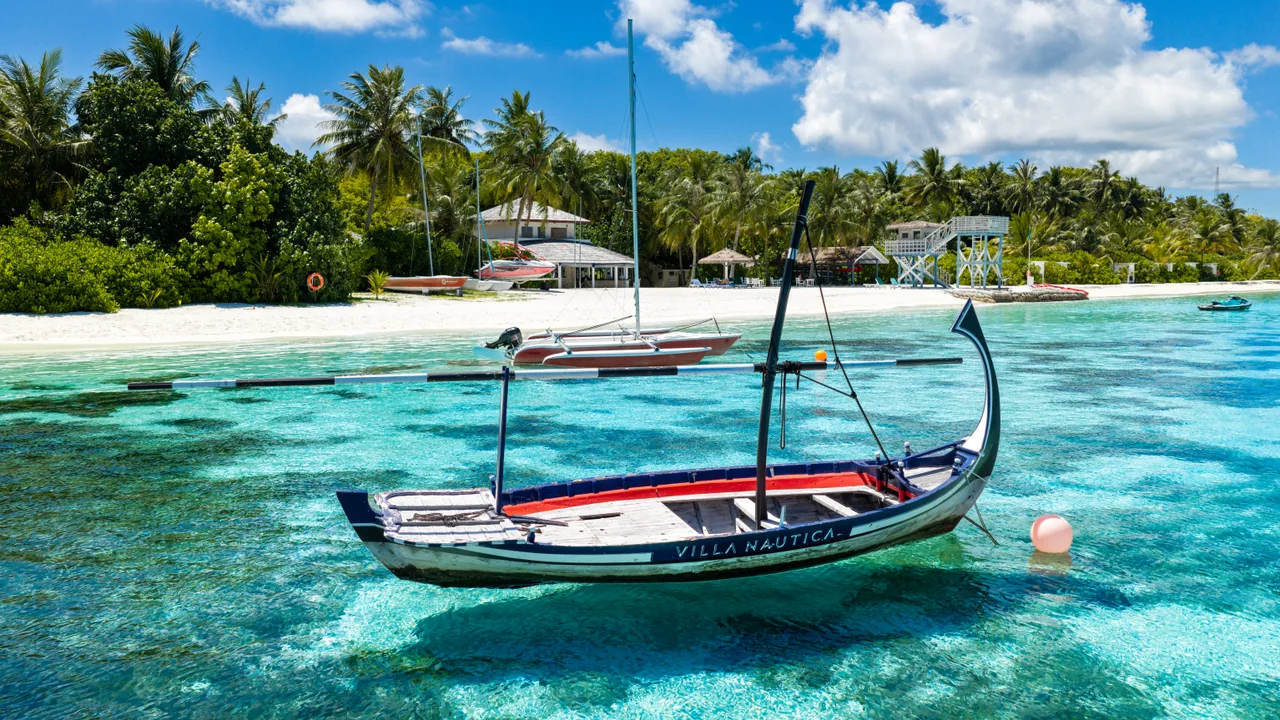
The same question applies to a hotel set in parkland: at what height can viewers best see the building and gardens? A very high shot can establish the grounds but make the terrace or pool look tiny. Include closer views of the spaces your guests will use.
Does everything need to be filmed in one take?
A continuous route from reception to the spa can be appealing. Before committing to it, check what the viewer will have time to see. If the camera crosses the bedroom in a second or mostly shows a corridor, it may miss the main reason to book.
Lighting can also make separate takes necessary. The difference between a terrace in bright sunlight and a dark interior can be too great to retain detail throughout. An exposure that suits the terrace may leave the room dark; an exposure that suits the room may make the outside too bright. Test the transition.
Possible solutions include choosing a different time, changing the route, adjusting the available lighting or filming the two spaces separately. Two well-exposed shots may show the hotel better than a single take with an interior that is too dark. They can then be joined in the edit.
In a spa, check reflections too. A mirror or the water’s surface may reveal the pilot, crew or equipment. Watch the test recording before approving the route: a reflection can be easy to miss from where the crew is standing.
Some lights can also cause flicker or banding in the footage. This depends in part on the lighting and camera settings, as explained in Sony’s guidance. A short test recording in the room can reveal the problem before the planned shoot begins.
How can you organise a shoot while the hotel stays open?
First, identify which spaces the hotel can make available, and for how long. Depending on the project, a few reserved time slots may be enough. Other shots may need more preparation or a different approach if access cannot be arranged.
For each space, agree on a time, a hotel team contact and a preparation checklist. For example: room cleaned, bed made, terrace tidied, lights switched on, paperwork and cleaning equipment removed. Allow time for tests and retakes; the drone’s flight is only a small part of the time needed.
Check access around the area too. An available room does not mean the corridor is clear. A spa closed to swimmers may still be used by staff, while reception needs to keep welcoming guests. Arrange these details with the hotel before the shoot.
If staff or extras will appear in the video, set their time slot and explain what they will need to do. For other shots, manage access to avoid anyone entering unexpectedly during a take. The flight’s feasibility and permissions must be checked for the specific location. For Luxembourg, our guide to drone permissions explains the requirements to consider.
Which formats do you need for your website and social media?
Specify where you will use the videos in the brief. A silent website background, a hotel overview and a Reel about the spa need different lengths and edits.
If you need vertical videos, say so before the shoot. Cropping a horizontal image can remove the terrace next to the bed, part of the pool or both sides of a façade.
Keeping the same image height, a crop from 16:9 to 9:16 retains only about 32% of the original width . Shooting in 4K does not change those proportions: even if the resolution is still sufficient, much of the image is lost at the sides.
For important Instagram or TikTok shots, plan a composition that works vertically, or capture a separate take. Check where text, logos and interface elements will appear. If the video is watched without sound, the useful information should still be clear on screen.
What should a hotel video quote include?
A day’s filming does not include the same services from every provider. One quote may cover footage only; another may include editing, music and several versions. Compare what your team will receive and be able to use.
Ask for these points to be specified:
- Spaces to cover : rooms, spa, restaurant, grounds, number of buildings and any need to return at a different time.
- Video deliverables : the length of the main video, horizontal and vertical versions, shorter adaptations or separate edits.
- Editing and revisions : colour work, on-screen text, subtitles, languages and the number of revision rounds included.
- Usage rights : the planned uses of the footage and music, including your website, social media and advertising.
- Files for your agency : rushes (unedited footage) or a finished video, file formats and the expected colour treatment.
- Rescheduling : what happens if the weather, access or flight conditions prevent certain shots.
Why choose DB Studio for your hotel video?
DB Studio brings specialist drone and FPV experience to hotel video production, with shoots in Luxembourg and the Maldives, at properties with very different architecture and surroundings. Two projects show this work in practice:
- Château d’Urspelt : FPV footage of the façade, courtyard and pool areas, including the indoor spa pool. These shots show how camera movement can reveal more of a hotel than exterior views alone.
- Villa Resorts : stabilised drone and FPV footage at Villa Nautica, Royal Island and Villa Park. DB Studio worked as a drone pilot and aerial camera operator, capturing wide views of the islands and closer passes around the villas.
Experience with both types of drone helps us choose the equipment to suit the space: a wide shot to establish the resort, or an FPV pass to explore a courtyard or pool. The framing and pace should give viewers time to see what makes your property worth visiting.
DB Studio can capture footage alongside your agency or provide a service that includes editing. We work with you to identify the spaces to show and the videos your team needs for its website and social media.
Sources & verification
- DB Studio — Château d’Urspelt
- DB Studio — Villa Resorts Maldives
- Sony — Flicker, lighting and shutter speed
Information last checked: .
Continue reading
Regulations
Drone permissions in Luxembourg: what should you plan for a professional shoot?
Using a drone for filming does not automatically require an operational authorisation. The location, date and flight conditions determine which steps are needed.
Read the guide