
Practical guide / Construction
Construction drone video: from progress coverage to a finished project film
An exposed frame, façades taking shape, the first completed spaces: on a construction site, some images cannot wait until handover.
Key points
The final film starts taking shape during construction.
-
Capture stages that will soon be hidden from view.
-
Choose stabilised drone, FPV or ground camera footage according to what the shot needs to show.
-
Keep visual reference points between shoots to follow the building’s transformation.
The building is complete. The façades are in place, the interiors fitted out and the surroundings cleared. Yet when it is time to put the film together, one image is missing: the exposed structure, before everything was covered. That shot can no longer be filmed.
A construction film therefore begins long before handover. It takes shape through framing, the stages selected and the connections between shots. Through DB Studio, I film building sites in Luxembourg, Moselle and Lorraineusing stabilised and FPV drones, with ground footage where the project calls for it. The GRIDX construction coverage, through to the film of the completed venue, illustrates this continuity.
How will the construction footage be used?
A project management team immediately recognises what has changed on its site. A future occupant or a visitor to the company website does not have those reference points. The film must first establish the building, make its scale and spaces clear, then show the work accomplished.
For a construction company, an attractive overview is not always enough to show its contribution. A frame, a joint or a finish may need a closer view. The drone places the building in context; ground footage reveals the detail of the work.
The footage can be useful while work is underway: announcing a milestone, sharing progress with teams or supporting the developer’s communications. It takes on another meaning in the final edit, when the same space appears first under construction, then complete.
This visual construction progress record by drone provides an audiovisual record of the project. It does not replace surveying, measurement photogrammetry, technical inspection or construction supervision.
What should you film, and when?
Façade installation hides the structure. Partitions change how the spaces read. Some moments warrant a visit precisely because they will not last. This outline helps plan coverage around the scheduled works; it does not describe the sequence of the GRIDX or National Archives assignments.
| Stage | What to show | Possible shots |
|---|---|---|
| Before work starts | The site before its transformation. | Overview and immediate surroundings. |
| Structural construction | The building’s dimensions and volumes. | Wide shots and views of the exposed structure. |
| Façades | The building’s emerging appearance. | Façades, materials and envelope details. |
| Fit-out | How the spaces are organised. | Accessible interiors, circulation routes and ground-level finishes. |
| Delivery | The completed building and its surroundings. | Architectural views and routes through the available spaces. |
On mobile, swipe the table to read all three columns.
The schedule is developed with the site team. A visit might coincide with structural frame installation rather than a monthly deadline. The aim is to capture a visible change, not collect almost identical shots.
Stabilised drone or FPV: which perspective fits?
A stabilised drone provides reference points: the building’s position, its relationship with the landscape and the length of a façade. A slow movement gives the viewer time to read those lines. To show progress, a restrained frame is often more useful than constant changes of angle.
FPV, flown using a live video feed in goggles, offers another perspective: a journey through the space. In an accessible hall, a movement can reveal the ceiling height before opening onto an adjoining room. This type of shot is planned after a recce, where the spaces and flight conditions allow it.
My first consideration is what the movement will reveal. A fast flight can look impressive without explaining anything about the building. Slowing at a perspective, revealing an opening or following a line makes the route understandable.
The FPV drone and stabilised footage complement each other. Ground shots add human scale and detail: materials, finishes or work activities arranged with the teams. The choice follows the shot we need, rather than a fixed preference for one aircraft.
On location / GRIDX, Luxembourg
GRIDX, from construction to the finished film
DB Studio followed the construction of GRIDX in Luxembourg with drone and FPV footage, through to a presentation film of the completed venue. This assignment connects footage captured during construction with the discovery of the finished spaces.
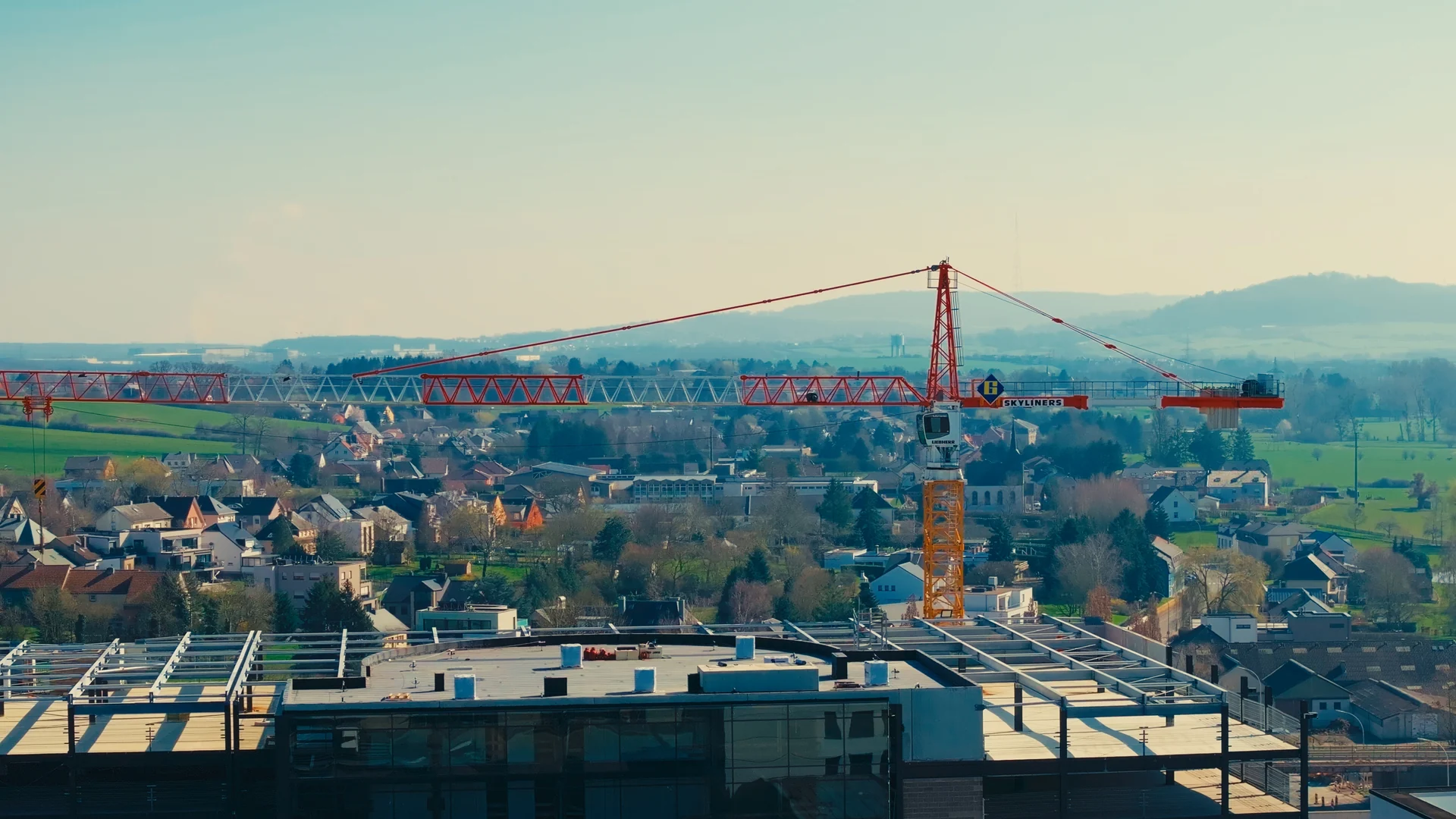
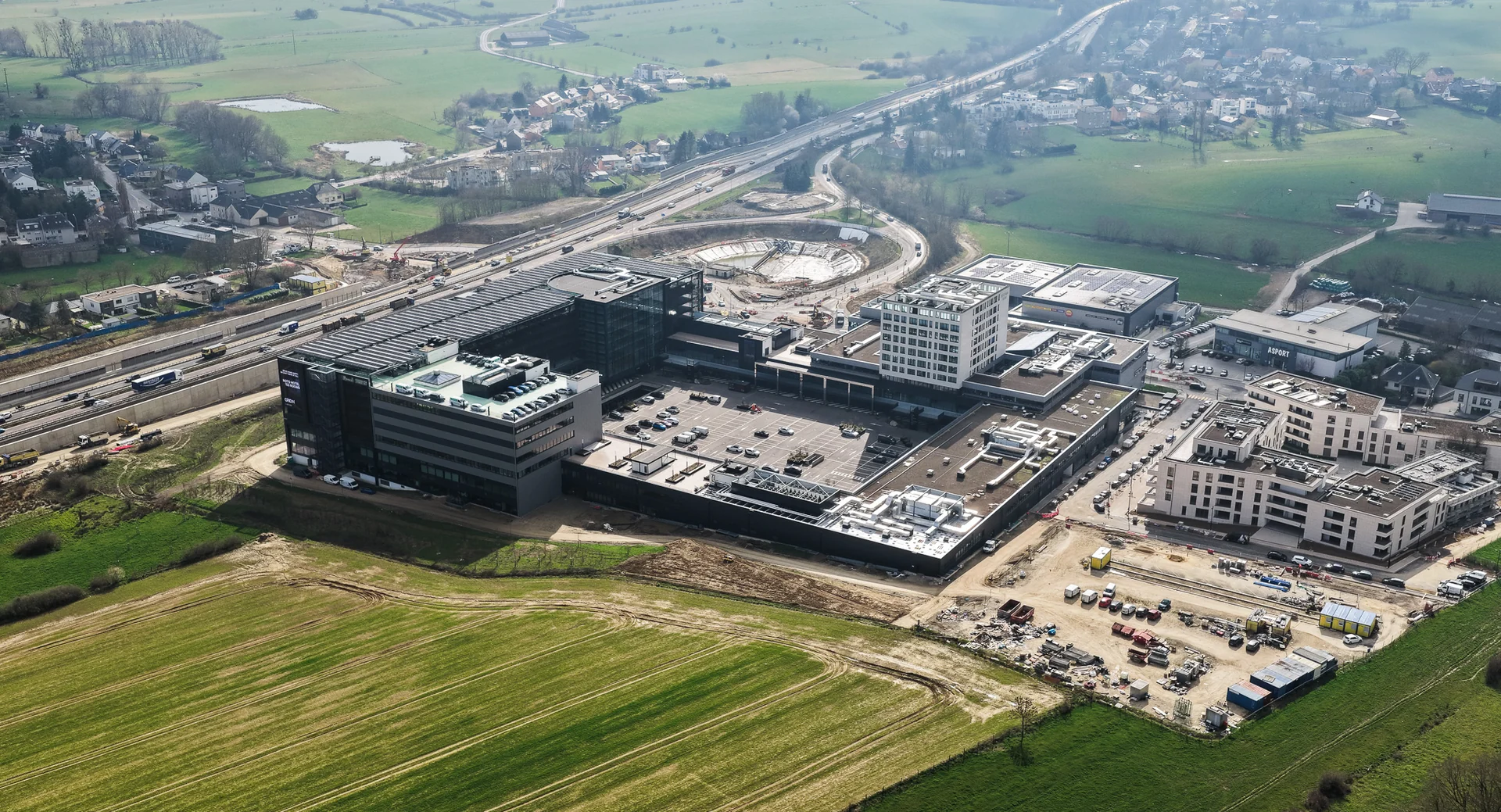
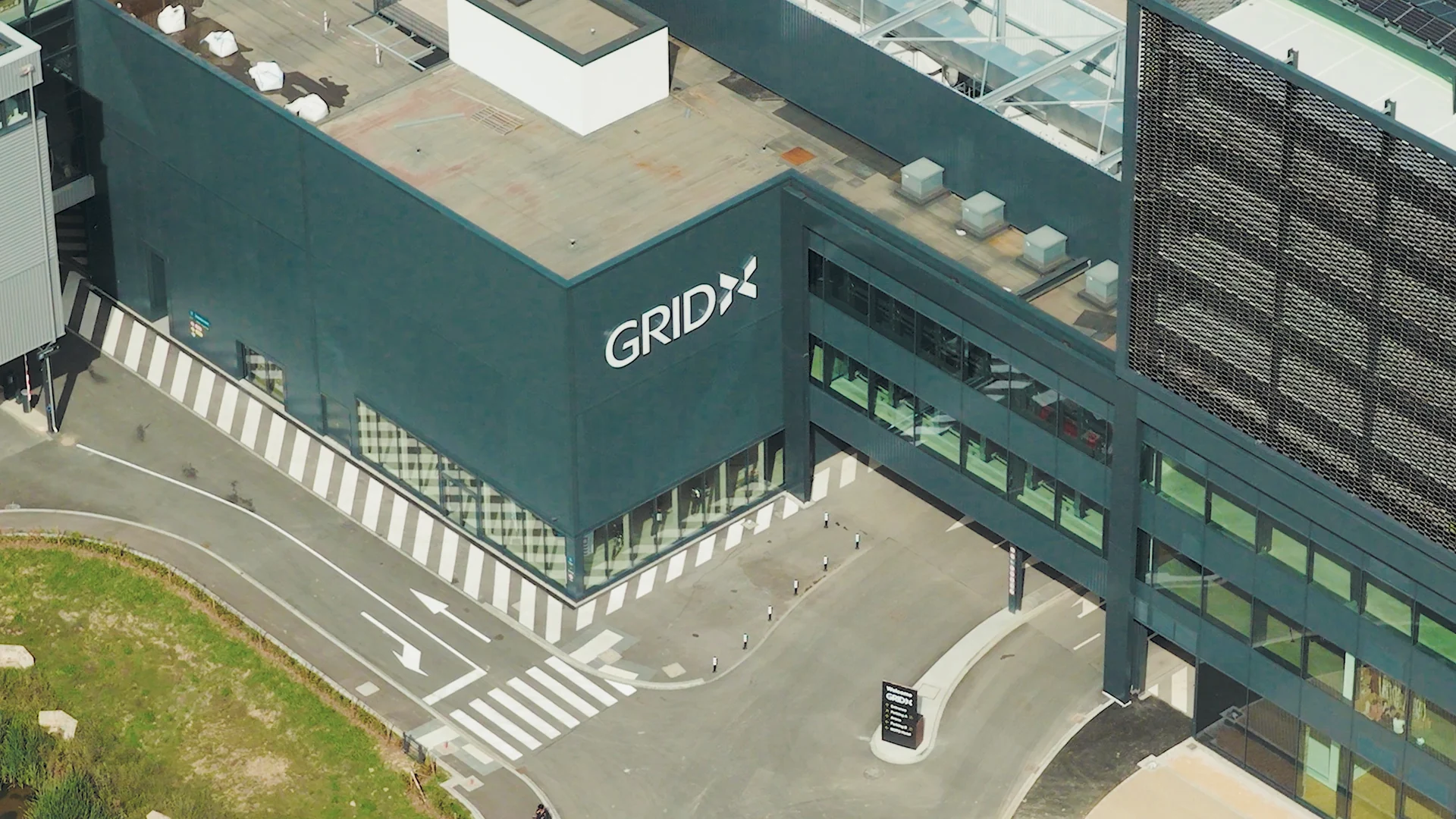
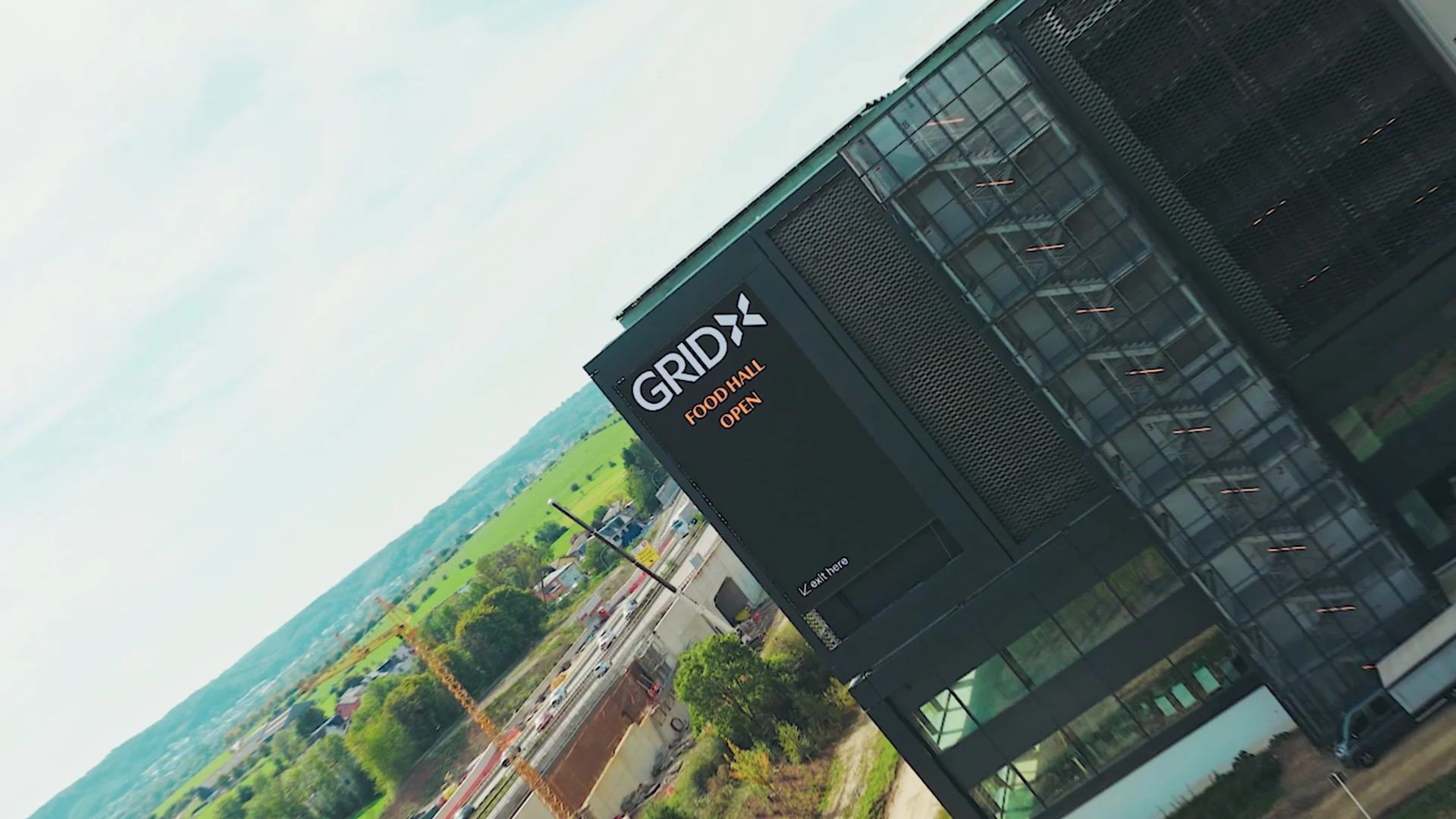
In the construction clip, the roof structure remains exposed and work is still underway around the building. The photographs show other aspects of GRIDX: its setting, forecourt, glazing and signage. The final film then reveals the fully completed venue. The subject remains the same; the story the images tell evolves.
The media below bring these perspectives together. The GRIDX project also has its own dedicated page.
Keeping visual reference points between shoots
A façade filmed from two very different angles is difficult to compare. To make the transformation clear, coverage can draw on a few reference views: the whole site, a structural angle or a façade perspective. Images from the previous visit then help plan the next, without fixing every composition.
Between shoots, a crane may occupy the planned line of sight or vehicles may move through a previously clear area. Site conditions are reassessed at every visit, even when waypoints or a flight path have been saved. The aim is to achieve comparable perspectives, without promising an exact repeat of the flight or measurement accuracy.
The edit also benefits from small decisions on location: holding a steady frame for a few seconds before moving, varying shot sizes and organising files by date and area. These choices make cuts easier and prevent good footage from getting lost in hours of rushes.
These successive drone visits remain individual shoots. A fixed timelapse serves a different purpose: recording change from a constant viewpoint over a long period.
As construction nears completion
The end of construction is a stage in its own right. Protective coverings disappear, materials emerge and the surroundings clear. The footage gradually moves away from documenting a building site to showing the architecture and use of the spaces, even if no footage was taken at the start of construction.
Not everything is ready at the same time. A façade may be complete while its forecourt remains cluttered; a finished room may still be used for storage. Filming is planned area by area, separating shots that can be captured immediately from those that would benefit from waiting.
Briefing the site team before filming
The right time to film depends as much on site activity as on the light. Before the shoot, a contact on site helps review access, the teams present, vehicle movements and sensitive operations.
A lifting operation, for example, changes the available areas and possible camera angles. It needs to be identified in advance. The shot plan adapts to this organisation, with viewpoints and time slots compatible with the teams’ work.
The owner’s permission alone does not authorise every flight. Feasibility and the necessary procedures must be checked for the location and planned shoot. Further details are available on the drone pilot in Luxembourg and drone pilot in Moselle.
Telling the construction story in the edit
A film does not benefit from keeping every shot. One overview may be enough to establish the site. A cut from an exposed structure to a finished façade sometimes says more than three consecutive movements around the building.
The edit depends on what the company wants to show. A film about its expertise gives space to the works and its contribution. A presentation for future occupants focuses more on the completed spaces, their proportions and circulation routes.
Depending on the brief, DB Studio handles filming and editing, or delivers footage to the agency producing the film. A selection of photographs, progress sequences or social media versions can complement the assignment. These deliverables are agreed at the outset, according to the intended channels.
Planning a vertical version, for example, affects framing on the shoot. A façade spanning the full width of a shot cannot always be cropped successfully for a phone screen.
A few questions before you start
Construction has already started. Is it too late to film?
No. The current phase becomes the starting point for the record. Façade installation, fit-out and finishing work can still provide useful footage through to handover. The film will tell the story of the stages actually documented.
Should we schedule a shoot every month?
Not necessarily. The frequency depends on visible progress and the stages worth recording. A visit before the façades are closed may be more useful than a monthly appointment. The schedule is adjusted with the site team.
Can FPV be used on any construction site?
No. It requires suitable spaces and a route that can be planned around obstacles and the people present. Depending on the situation, a stabilised shot or ground footage may be more appropriate.
Our agency handles the edit. Can you take care of filming?
Yes. DB Studio also provides filming only, working with the agency or editor. The brief specifies the required shots, recording formats and how the delivered files should be organised.
A construction site to film in Luxembourg or Moselle?
A structure about to be covered, a façade nearing handover, a building ready to open: some shots have a specific window. To prepare the shoot, share the site location, its current phase, the next key stages and the channels the footage is intended for.
DB Studio produces construction drone videos in Luxembourg, Moselle and Lorraine, with travel elsewhere in France depending on the project.